LBA, Gompa and Nambardar associations announce boycott of local elections, while Kargil Democratic Alliance calls shutdown; the growing dispute exposes a deeper crisis of representation and public confidence in Ladakh’s administration
By: News Desk | 09 November 2026
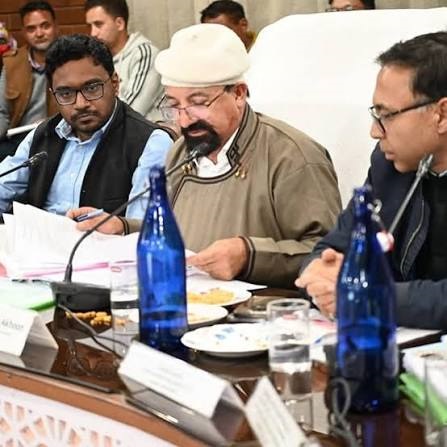
Leh/Kargil: Ladakh’s election season is opening with an unusual political challenge. In Leh, three influential organisations — the Ladakh Buddhist Association (LBA), Ladakh Gompa Association and Ladakh Nambardar Association — have announced a boycott of the upcoming panchayat and municipal elections. In Kargil, the Kargil Democratic Alliance (KDA), political representatives, traders and civil society groups are mobilising against the proposed timing of the Ladakh Autonomous Hill Development Council (LAHDC) elections.
At first glance, the dispute appears to be about winter polling and constituency boundaries. But the objections being raised in both regions point towards a much wider problem: who gets to decide how Ladakh is governed, how local communities are represented and whether the administration is willing to consult people before taking decisions that directly affect them.
Influential organisations in Leh have announced a boycott of upcoming local elections, while Kargil groups have called a shutdown against the proposed Hill Council poll schedule. The dispute has brought winter migration, delimitation and local democratic representation into focus.
The immediate confrontation has brought the administration under pressure from organisations with considerable influence in their respective areas. More importantly, it has exposed a growing trust deficit at a time when Ladakh’s political groups are already dissatisfied with the pace of negotiations over constitutional safeguards, statehood and greater local autonomy.
The boycott and shutdown calls do not establish that Leh and Kargil have formed a single political front. Their wider political priorities are not identical. But their objections to the election process have created an area of common ground that the administration cannot afford to dismiss as routine electoral opposition.
Three organisations in Leh announce election boycott
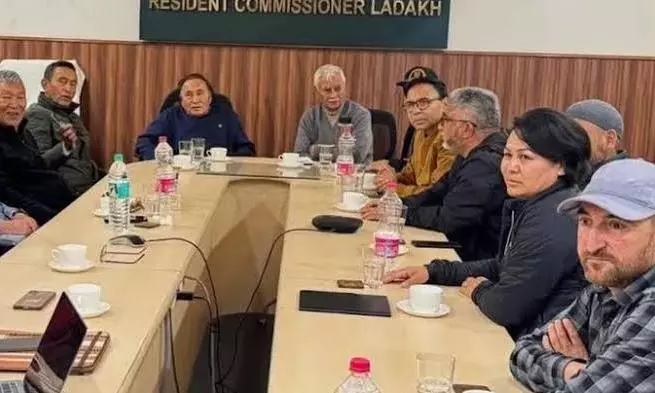
The decision in Leh was taken at a meeting involving the Ladakh Nambardar Association, Ladakh Buddhist Association and Ladakh Gompa Association.
LBA president Chering Dorjay Lakrook said the proposal originated with the Nambardar Association and was supported by the other two organisations. According to his account, around 70 Nambardars presented the proposal seeking a boycott, which received the backing of the LBA and Gompa Association.
The organisations have expressed dissatisfaction with the delimitation exercise, the timing of the elections and the administration’s handling of unresolved local issues.
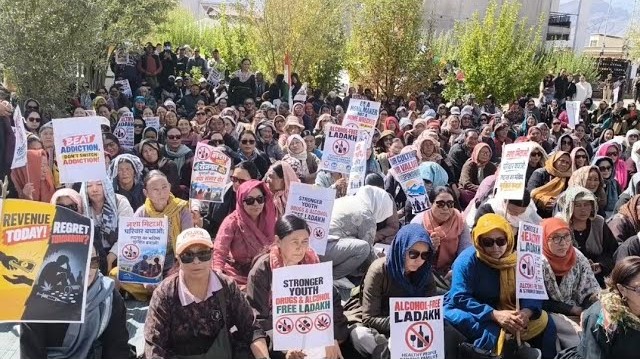
The controversy is not confined to constituency boundaries. Lakrook has also referred to assurances concerning the liquor policy, which were made after protests by women’s groups but, according to the organisations, have not been implemented satisfactorily.
His criticism reflects a wider complaint: local organisations believe decisions are being taken without sufficient consultation and that assurances given during earlier engagements have not translated into action.
The significance of the announcement lies partly in the organisations involved. The LBA has historically played an important role in Leh’s social and political mobilisation, while the Gompa and Nambardar associations have links with religious institutions and village-level representation. Their combined position gives the boycott political weight beyond that of an ordinary call issued by an individual party.
However, an announcement of a boycott should not automatically be treated as proof that every resident or voter in Leh will abstain. Its actual reach will depend on whether the organisations can persuade people, candidates and local networks to follow the decision when polling takes place.
Why winter elections have become the central issue
The strongest practical objection raised by the protesting groups concerns Ladakh’s winter conditions.
Winter in the region is not simply a seasonal inconvenience. Severe temperatures, difficult terrain, road closures and disrupted transport can make movement between villages and administrative centres challenging. For some residents, seasonal migration is a regular necessity.
Political representatives and protest leaders have claimed that approximately 20 to 25 per cent of Ladakh’s population moves to other parts of the country during the harsh winter months. They have cited migration to Jammu, Srinagar, Delhi and other locations, particularly among elderly residents, students and members of the business community.
This estimate is a claim made by local political representatives and should not be confused with an independently verified official migration figure. Nevertheless, the underlying logistical concern is real: a voter who has left Ladakh for the winter may find it difficult to return to cast a ballot, particularly if the election is announced at short notice.
Students studying outside the region face a similar difficulty. Elderly residents and people living in remote settlements may encounter additional barriers if weather conditions deteriorate or transport links become unreliable.
The issue therefore goes beyond voter convenience. If a significant section of eligible voters is away during polling, the result may reflect the preferences of those who remain rather than the full electorate.
That does not automatically make an election invalid. But it can weaken public confidence in the representative character of the outcome, particularly when major organisations have already questioned the timing.
Ladakh’s geographical conditions should be treated as an essential part of election planning, not as an afterthought.
An important distinction: three election processes, not one
The current controversy involves different elections, and the distinction is important for understanding the political situation.
The administration has announced municipal committee elections in Leh and Kargil, with polling scheduled for November 21, 2026. The municipal election process covers 21 wards in Leh and 17 wards in Kargil. The final electoral rolls published on October 22 contained 2,720 electors for Leh Municipal Committee and 645 for Kargil Municipal Committee.
The wider panchayat election process is also scheduled for November, with the administration indicating that the process will be completed by November 30.
The Kargil Democratic Alliance’s current mobilisation, however, is particularly directed against the proposed LAHDC elections. These are elections to the autonomous hill development councils, which have a distinct institutional role under the Ladakh Autonomous Hill Development Councils Act.
As of November 10, the administration had not announced the polling dates for the LAHDC elections. The KDA is opposing the prospect of holding them during the harsh winter period, particularly in December.
This distinction matters because the Leh organisations have announced a boycott of panchayat and municipal polls, while the Kargil agitation is focused heavily on the proposed Hill Council election schedule. The disputes overlap, but the elections are not interchangeable.
The administration’s municipal election notification and the statements of protest leaders confirm that different election calendars are now generating a wider political confrontation.
Delimitation dispute: the question is representation
The second major source of opposition is the delimitation of constituencies.
Delimitation determines how geographical areas are divided into electoral constituencies. It can influence which villages are grouped together, how communities are represented and how effectively elected members can respond to local concerns.
In a region such as Ladakh, where settlements are widely dispersed and geographical conditions vary sharply, constituency boundaries have practical as well as political consequences.
The protesting organisations allege that the exercise has not adequately reflected local realities and that communities were not meaningfully consulted. In Kargil, KDA leaders have described the process as flawed and accused the administration of imposing decisions without taking stakeholders into confidence.
There is, however, an important procedural detail that needs to be acknowledged.
The administration published draft delimitation proposals for LAHDC constituencies in October and invited objections and suggestions, with November 2 set as the deadline. The final delimitation notification was issued on November 5.
The completed exercise covers 100 constituencies across eight districts: Leh, Sham, Changthang, Zanskar, Nubra, Kargil, Drass and Sankoo.
Therefore, the claim that no formal opportunity to submit objections existed would be inaccurate. A draft process and an invitation for objections were part of the official procedure.
But the existence of a formal objection window does not settle the political dispute. The more important questions are whether affected communities had sufficient time and information to assess the proposed boundaries, whether their objections were examined transparently and whether the final decisions adequately addressed local concerns.
A delimitation exercise can satisfy procedural requirements and still face a credibility problem if residents believe their views were not genuinely considered.
That is the challenge the administration now faces.
Kargil prepares shutdown and ‘Save Democracy’ protest
The opposition in Kargil has taken a more visibly political form.
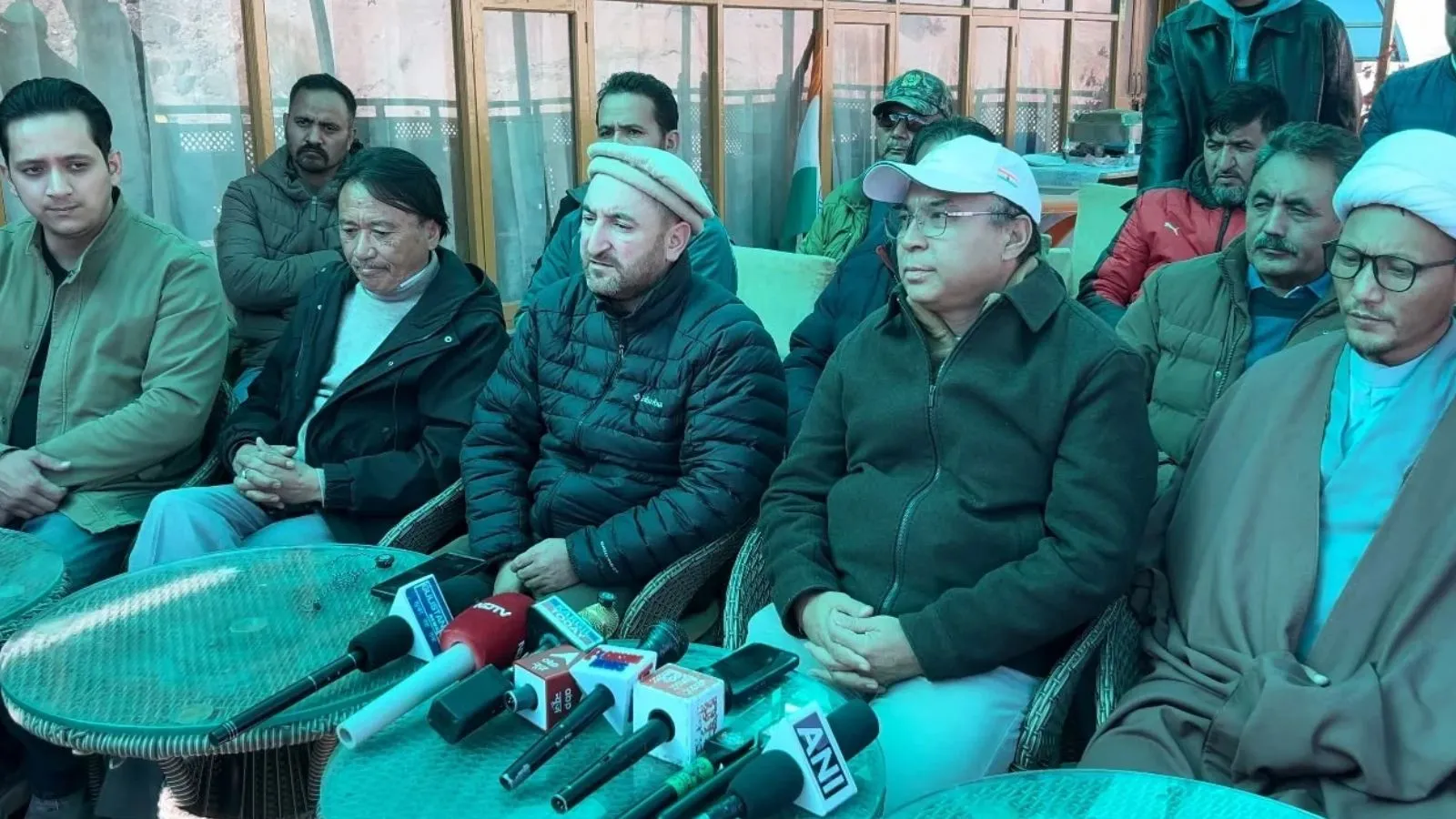
The Kargil Democratic Alliance, which brings together political and civil society voices, has mobilised traders, religious organisations and other groups against the proposed Hill Council election schedule.
The alliance announced a complete shutdown in Kargil on November 10, followed by a candlelight march under the banner of ‘Save Democracy’. KDA co-chairman Sajjad Kargili said the shutdown would continue until 5 pm, with essential services such as medical facilities, water supply and school buses exempted.
The demands include postponement of the LAHDC elections, a review of the delimitation exercise and greater respect for democratic participation.
Kargili has argued that the administration is taking decisions unilaterally and that local concerns are being ignored. The alliance has also linked the election dispute with the wider demand for stronger democratic institutions and effective powers for the hill councils.
The presence of Ladakh MP Haji Hanifa Jan at the press conference added political weight to the demand. Jan has separately written to Lieutenant Governor Vinai Kumar Saxena, seeking deferment of the proposed council elections and citing winter migration, difficult weather, road connectivity and the need for a comprehensive revision of electoral rolls.
In Leh, the Leh Apex Body has also signalled the possibility of a broader agitation and called for the Hill Council elections to be postponed until April or May next year.
The protests therefore extend beyond a single organisation or district. They involve elected representatives, social bodies, traders and political platforms.
The larger question: what remains of local autonomy?
The election dispute is unfolding against a much larger political background.
Since Ladakh became a separate Union Territory in October 2019, political organisations in the region have continued to demand constitutional and administrative safeguards. Among their principal demands are statehood, inclusion under the Sixth Schedule of the Constitution, protection of land and employment rights, and a stronger role for local communities in decision-making.
The Leh Apex Body and Kargil Democratic Alliance have been important platforms in this wider political mobilisation. Although their constituencies and political priorities are not identical, both have participated in efforts to press the Centre for a more secure political and constitutional arrangement for Ladakh.
The current election dispute has revived a related concern: whether the institutions that already exist in Ladakh have sufficient authority to respond to local needs.
The LAHDCs were created to provide a degree of local self-governance and decentralised development. Their importance is therefore not limited to elections. They are also part of the institutional framework through which local communities expect to exercise influence over development and administration.
KDA representatives have argued that the councils have been weakened by the withdrawal or reduction of their powers. That is a political assessment which needs to be examined against the legal and administrative changes affecting the councils. But the argument itself is significant because it shows that the dispute is about the substance of local government, not simply the identity of the next elected representatives.
If people believe that elected councils have limited authority, that their constituencies are drawn without adequate consultation and that elections are scheduled without regard to local conditions, participation can begin to look like a formal exercise rather than a meaningful democratic choice.
Why the Leh–Kargil overlap matters
Leh and Kargil have distinct social, religious and political identities. Their political organisations have not always approached the region’s future through the same demands or strategies.
That is why the parallel opposition to the election process deserves attention.
The LBA, Gompa Association and Nambardar Association are raising objections from Leh, while the KDA and allied groups are mobilising in Kargil. Their immediate concerns overlap around winter timing, delimitation and the need for consultation.
This does not mean that a single united movement has emerged. Nor does it establish that the organisations have agreed on a common political programme extending beyond the elections.
But it does mean that the administration is facing criticism from influential groups on both sides of the region over decisions that affect local representation.
Historically, differences between Leh and Kargil have complicated the formation of a common political position on Ladakh’s constitutional future. When objections emerge simultaneously in both regions, the administration has less room to treat them as isolated local complaints.
The present situation offers an opportunity as well as a risk. A transparent consultation process could create common ground around electoral fairness even where wider political priorities remain different. A dismissive response, by contrast, could deepen the sense that local institutions are being bypassed.
The unresolved demands are adding to the pressure
The current protests are also taking place amid continuing dissatisfaction over broader issues.
The Leh organisations have referred to the liquor policy and the non-fulfilment of assurances made after protests by women’s groups. Kargil organisations have raised concerns about the future of the Hill Councils, democratic rights and the slow progress of dialogue with the Centre.
The latest agitation has also been linked by protesting groups to demands for justice for those killed and injured during the September 2025 firing incident in Ladakh.
These issues are not identical, and they should not be reduced to one grievance. But their appearance alongside the election dispute shows how quickly a question about polling dates can become part of a wider argument about governance.
For the administration, this creates a difficult political situation. Addressing the election schedule alone may not resolve complaints about delimitation, local powers or unfulfilled assurances. Equally, a discussion about constitutional demands cannot replace the immediate need to ensure that local elections are fair and accessible.
The challenge is to deal with each issue on its own merits while recognising the broader loss of confidence that connects them.
Three possible paths for the administration
1. Elections proceed without a change in schedule
This remains a possible short-term outcome, particularly for the municipal and panchayat elections for which the administration has already announced a timetable.
If the boycott calls remain in place, participation could vary between areas. The organisations opposing the polls may use turnout figures to argue that the election process lacked public acceptance.
However, a boycott announcement alone cannot establish how many voters will stay away. Actual participation, candidate response and the conduct of polling will determine the scale of its electoral impact.
2. Authorities offer partial accommodation
The administration could open further consultations, explain the delimitation decisions, publish responses to objections and reconsider the timing of the LAHDC elections.
A postponement of the Hill Council polls until weather conditions improve is one demand being made by political and social organisations. A decision on the municipal and panchayat elections would have to be considered separately, given their existing notifications and schedules.
Even if the administration does not accept every demand, a transparent review could reduce confrontation and restore some confidence.
3. The dispute expands into a wider agitation
If the administration proceeds without addressing the concerns, the protests could move beyond election timing.
The Leh Apex Body has already indicated that it may launch a broader agitation, while the KDA has warned of sustained mobilisation. If these platforms maintain pressure, the election dispute could become part of the wider campaign for statehood, constitutional safeguards and stronger local institutions.
That outcome is not inevitable. It will depend on how the administration responds, whether political groups maintain coordination and whether the protests attract participation beyond organised leadership networks.
What the administration should do now
The immediate requirement is not another round of public statements. It is a credible process through which the administration can demonstrate that objections are being heard and examined.
First, it should clearly explain the election calendar for municipal committees, panchayats and LAHDCs separately. Confusion over different polls is adding to public uncertainty.
Second, the delimitation process needs a transparent public explanation. The administration should make clear how objections were considered, what changes were accepted or rejected and why the final boundaries were adopted.
Third, the administration should assess the practical impact of winter migration and weather conditions on voter access. If a significant number of eligible residents are likely to be away, the election authorities should explain what measures can realistically improve participation.
Finally, the government must engage with the Leh Apex Body, KDA, elected representatives and other stakeholder organisations. Consultation cannot be limited to announcing decisions after the key choices have already been made.
A democratic process gains legitimacy not merely because an election is held on the notified date, but because voters believe they have had a fair opportunity to participate and that their representatives will exercise meaningful authority.
More than an election boycott
The immediate electoral impact of the boycott remains uncertain. Some voters may follow the organisations’ call, others may choose to participate, and candidates may respond differently across constituencies. It is too early to declare that the boycott will succeed or that the administration will be forced to change the schedule.
But the political message is already visible.
In Leh, influential social and religious organisations have questioned the administration’s decisions. In Kargil, political groups, traders and civil society organisations have taken the dispute to the streets. Their objections are rooted in the practical realities of winter, but they also reflect deeper concerns about representation, consultation and the authority of local institutions.
The administration may still be able to conduct the elections. Yet conducting polls and securing public confidence are two different achievements.
For Ladakh, the larger test is whether local democracy can function in a way that reflects the region’s geography, social realities and political expectations. If the present concerns are addressed through dialogue and transparent decisions, the election dispute could become an opportunity to strengthen democratic institutions.
If they are ignored, the boycott and shutdown may prove to be only the opening phase of a broader political confrontation.
The question before the administration is therefore not simply whether Ladakh will vote in November or December. It is whether the people of Ladakh will feel that the process belongs to them.